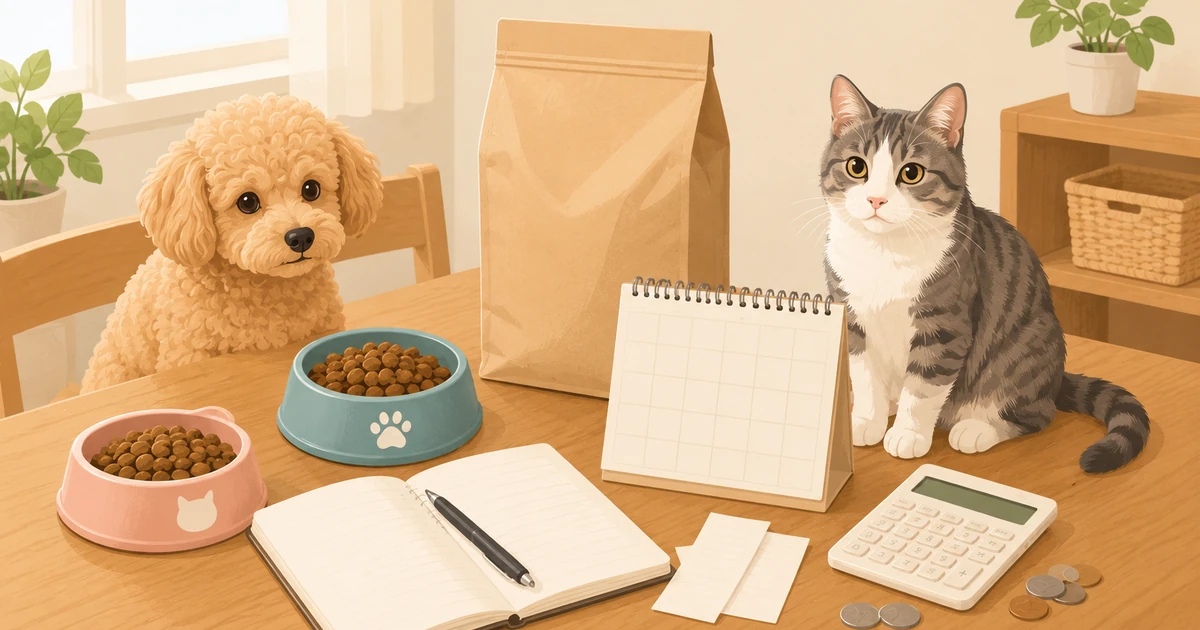

Food is one of the costs that continues almost every month after welcoming a dog or cat. It is also hard to judge from the bag price alone. The monthly cost changes with the daily feeding amount, package size, purchase price, wet food, treats, and how quickly the food is used.
This guide keeps the Japan-based assumptions from the Japanese article. It is not a product ranking, feeding diagnosis, or recommendation for therapeutic food. The goal is to help you turn the feeding amount and receipt information you already have into a simple household budget memo.
Feeding amounts vary by body size, age, activity, health condition, and food type. The calculations here are for household budgeting only. For treatment, weight control, therapeutic food, or health concerns, check with your veterinarian and the food manufacturer’s current official information.
What this guide covers
- How to estimate dog and cat food costs per month
- How to read daily feeding amount, package size, and purchase frequency
- Why dry food, wet food, and treats should be separated
- What to watch for when buying larger packages
- How to connect food cost to the dog or cat annual cost calculators
Summary first
Food cost becomes easier to see when you calculate these two numbers first.
Estimated days per package = package size (g) ÷ daily feeding amount (g)
Estimated monthly food cost = daily feeding amount (g) × 30 days ÷ package size (g) × package price
For example, if a cat eats 70g per day and uses a 2kg bag, the bag lasts about 28.5 days. If one bag costs ¥3,000, the monthly dry food cost is about ¥3,150. If the bag costs ¥5,000, the monthly cost is about ¥5,250.
If a dog eats 180g per day and uses a 6kg bag, the bag lasts about 33.3 days. If one bag costs ¥6,000, the monthly dry food cost is about ¥5,400. If the bag costs ¥12,000, the monthly cost is about ¥10,800.
These are calculation examples, not market averages or guaranteed prices. Your actual cost depends on the food, body size, age, store, price changes, bulk buying, wet food, treats, and waste.
You can also use the simple memo tool below to estimate monthly cost and purchase frequency from your own inputs.
See related articles and tools
Jump to related cards before the reference section.
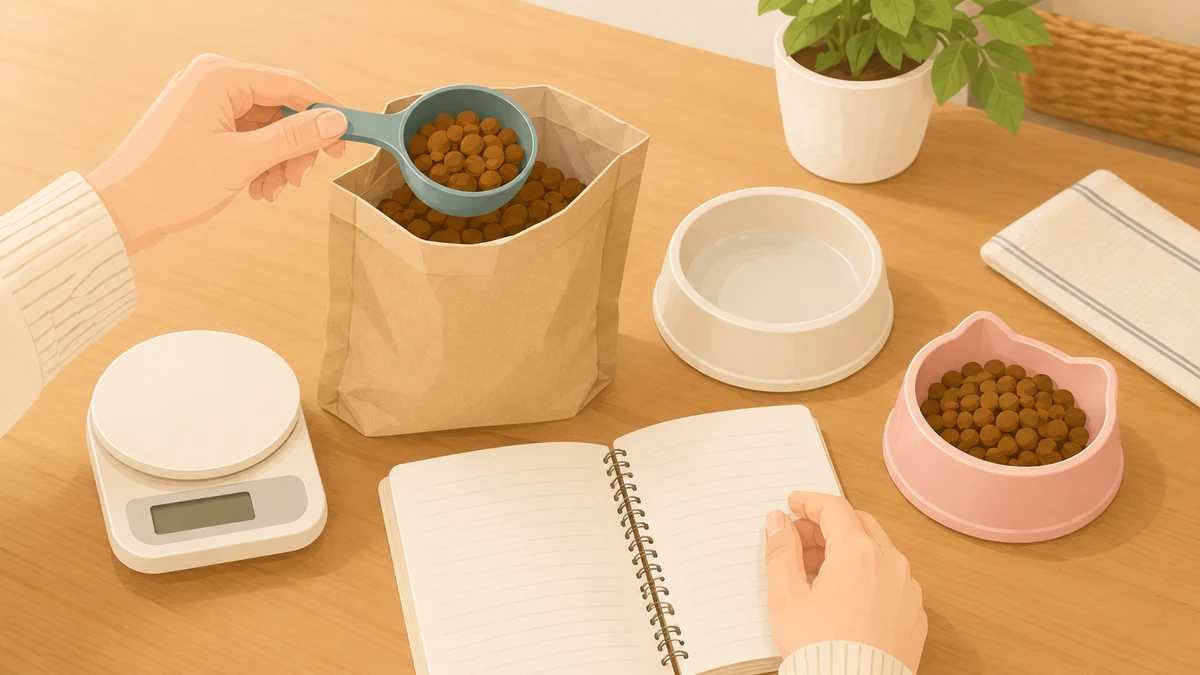
Separate daily feeding amount, package size, and package price before estimating the monthly amount.
Five inputs that determine food cost
Before searching for cheaper food, write down the inputs that actually change the cost.
| Input | Where to check | How to use it in a budget memo |
|---|---|---|
| Daily feeding amount | Package label, manufacturer’s official page, veterinary instruction | Estimate how many grams are used each day |
| Package, can, or pouch size | Net content on the package | Estimate how many days one package lasts |
| Package, can, or box price | Store, official online shop, receipt | Record it because prices and sales change |
| Number of pets | Per dog or cat | Calculate separately for each animal in a multi-pet home |
| Additional food items | Wet food, toppings, treats, therapeutic food | Add them separately from the staple dry food |
The ペットフード公正取引協議会 explains that net content should be stated in units such as g, kg, ml, or l, and that feeding instructions should be shown in an understandable way because the amount and frequency differ by purpose, age, and body weight[2]. The Ministry of the Environment Q&A also explains that the fair competition rules cover items such as purpose, content amount, feeding method, and ingredients in addition to the five mandatory items under the Pet Food Safety Act[3].
For a food-cost memo, the practical starting point is to put feeding amount, content amount, and price into the same unit.
Start from the package and official feeding information
For commercial pet food, use the feeding amount shown on the package or the manufacturer’s official page as the starting point. The Ministry of the Environment guide says that, for commercial pet food, owners should refer to the feeding amount and instructions shown on the package and adjust according to the dog’s body weight and health condition[1].
The right amount can change by life stage, body condition, activity, and whether the animal is a puppy, kitten, adult, senior, or under veterinary instruction. Manufacturer tools and feeding tables also commonly ask for items such as age, body weight, activity, and body condition[6][7].
Do not rely only on what worked for a previous pet or what you saw online. Check the current pet, the current food, and the current official information.
| Situation | Budget memo note |
|---|---|
| Growth period | Amounts and feeding frequency may differ from adult food |
| Senior period | Appetite, weight, medical conditions, teeth, and digestion may change |
| After neutering or spaying | Weight control may require checking official information or veterinary guidance |
| Multi-pet home | Track feeding amounts for each animal |
| Therapeutic food | Do not change the food or amount without veterinary instruction |
Separate dry food, wet food, and treats
A realistic monthly estimate should not stop at the staple dry food. If you use wet food, treats, toppings, supplements, or therapeutic food, put them on separate lines.
| Item | What is easy to miss | Memo method |
|---|---|---|
| Dry food | Large bags make monthly spending look uneven | Convert one bag into days and monthly cost |
| Wet food | A small daily amount can add up over a month | Write how many cans or pouches are used per day |
| Treats | Family members may buy them separately | Set a monthly limit apart from staple food |
| Toppings | Small additions can become a fixed cost | Write how many times per week they are used |
| Therapeutic food | The cost may relate to clinic visits and tests | Record the veterinary instruction and purchase source |
The Ministry of the Environment guide warns that excessive snacks can lead to nutritional imbalance or excess calories, and it describes therapeutic food as something to be given under veterinary guidance[1].
Purchase frequency helps prevent both shortages and overbuying
In addition to monthly cost, it is useful to estimate how many days one package will last.
Days per package = package size (g) ÷ daily feeding amount (g)
Next purchase memo = opening date + days per package - reserve days
For example, if a 2kg bag is used at 70g per day, it lasts about 28.5 days. If you want a margin for delivery delays or forgetting to buy, you might prepare the next bag around day 25.
A larger package can reduce the price per gram, but it is not always the best choice. It may become close to the best-before date before it is used up, lose freshness after opening, or remain unused if the food needs to change. The Ministry of the Environment Q&A explains that the best-before date is set for unopened products stored properly[3].
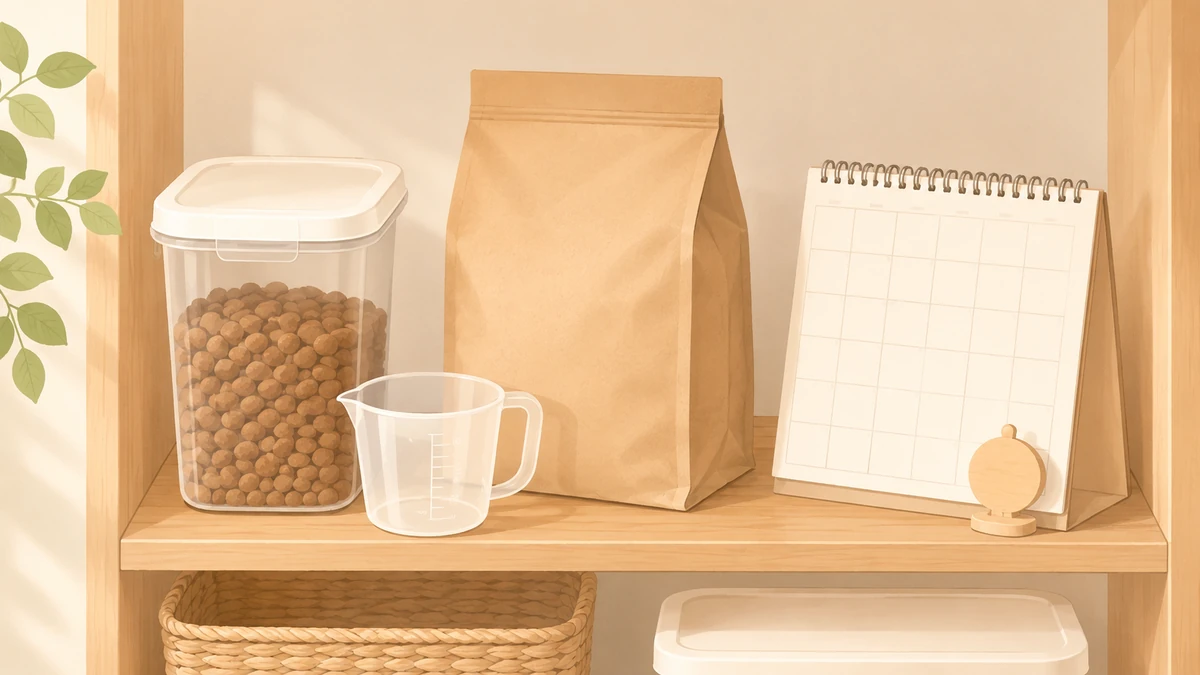
Use package size and daily feeding amount to decide when to buy the next bag.
The calculation is the same for dogs and cats, but the checks differ
The monthly calculation formula is the same for dogs and cats. The practical checks can differ.
The Ministry of the Environment guide explains that adult dogs may be fed in two meals per day and puppies may need more frequent meals. For cats, it describes a tendency to eat small amounts frequently, while also stressing clean and fresh food management[1].
| Animal | Estimate note | Budget memo example |
|---|---|---|
| Dog | Body size varies widely, so the feeding amount may vary widely | Separate small, medium, and large dog assumptions |
| Cat | Small frequent eating, free-feeding, and wet food use can change the memo | Separate dry and wet food |
| Dogs and cats together | Do not mix dog food and cat food | Keep dog and cat tables separate |
Wet food and homemade-style food can spoil more easily if left out, so leftovers and waste can affect the real cost as well as hygiene[1].
Example monthly memo
Here is a simple way to separate staple food, wet food, and treats.
| Item | Example input | Calculation memo |
|---|---|---|
| Staple dry food | 70g/day, 2kg bag, ¥3,000 per bag | 2,000 ÷ 70 = about 28.5 days. About ¥3,150 per month |
| Wet food | 1 pouch/day, ¥150 per pouch | ¥150 × 30 days = about ¥4,500 |
| Treats | 2 bags/month, ¥500 per bag | About ¥1,000 |
| Total | Dry + wet + treats | About ¥8,650 |
This is only a writing example. Update your actual memo using your receipts, official store price, subscription price, or local store price.
Combine the memo with the annual cost calculators
Food cost is only part of the monthly and annual pet budget. Dogs may also involve toilet sheets, prevention, registration, grooming, hotel use, and a medical reserve. Cats may involve litter, toilet supplies, indoor environment setup, and a medical reserve.
On PlanWise Guide, the dog and cat annual cost calculators can help you estimate the wider annual picture. Use the monthly food amount from this guide as one input memo when planning the full budget.
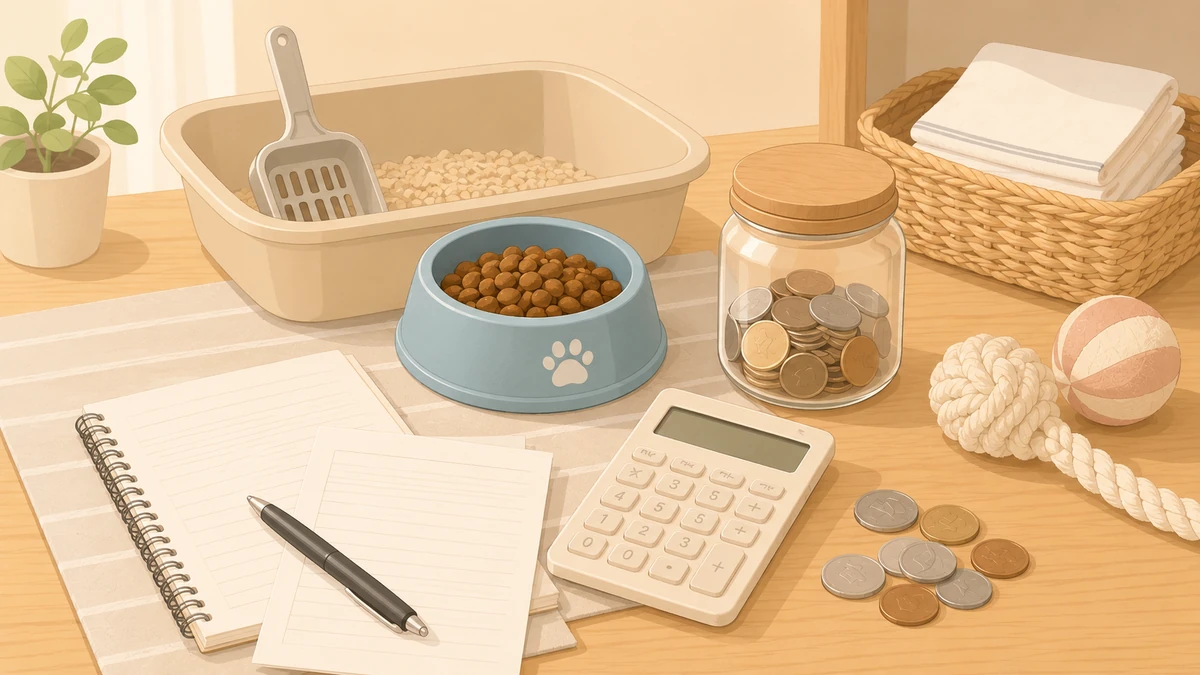
Convert food cost to a monthly amount before adding it to the annual pet budget.
When reducing food cost, do not cut too far
Reviewing food cost is useful, but cutting health, safety, or hygiene too aggressively can lead to later clinic visits or replacement purchases.
Items that are easier to review include purchase frequency, subscriptions, package size within the same product, whether the food is used up, unnecessary treats, and duplicate purchases by family members. Do not change therapeutic food, growth-stage food, weight-control feeding amounts, allergy-related diets, or medical-condition-related diets on your own.
The safer goal is not simply to buy the cheapest option. A better goal is to understand the needed amount, reduce waste, and make additional food costs visible while protecting health and hygiene.
FAQ
Is the feeding amount on the package enough?
Use the package or official page as a starting point. The amount may need adjustment depending on weight, body condition, age, activity, and health. If weight change, stool condition, appetite, or general condition worries you, consult a veterinarian.
Does buying a large bag always save money?
The price per gram can be lower, but also check storage after opening, best-before date, whether the bag can be used up, and the possibility of changing food. For a single pet or a small eater, a size that can be used up may reduce waste.
Can dogs and cats use the same formula?
The monthly-cost formula is the same. However, dog food and cat food, feeding amount, eating style, wet-food use, and hygiene management should be considered separately. In a dog-and-cat household, use separate tables.
Should treats be included in food cost?
For household budgeting, put treats on a separate line from staple food. Small purchases can become a fixed monthly cost, and the amount also affects calories and nutrition.
Can I use this formula for therapeutic food?
You can convert package size, feeding amount, and price into a monthly amount. However, choosing therapeutic food, changing the amount, or switching products should follow veterinary guidance.
Summary
Dog and cat food cost cannot be judged from the package price alone. Start by aligning daily feeding amount, package size, and price, then estimate purchase frequency and monthly cost. Put wet food, treats, therapeutic food, and toppings on separate lines to see the monthly impact more clearly.
The purpose of reviewing food cost is not to cut necessary food. It is to protect health and hygiene while reducing forgotten purchases, overbuying, and duplicate purchases. Once you have a monthly food amount, combine it with the dog or cat annual cost calculators to check the wider budget.
References checked
| No. | Source | Checked | How it was used |
|---|---|---|---|
| [1] | 環境省「飼い主のためのペットフード・ガイドライン」 | 2026-05-27 | Feeding amounts, dog and cat eating patterns, wet-food hygiene, treats and therapeutic-food cautions |
| [2] | ペットフード公正取引協議会「公正競争規約に基づく必要表示事項及び表示制限について」 | 2026-05-27 | Content amount, feeding instructions, ingredients, complete-and-balanced food display checks |
| [3] | 環境省「ペットフード安全法Q&A」 | 2026-05-27 | Display items, best-before date, content amount, and feeding-method checks |
| [4] | 農林水産省「ペットフード安全法 表示チェックシート」 | 2026-05-27 | Pet Food Safety Act display item check |
| [5] | 一般社団法人ペットフード協会「ペットフードの表示」 | 2026-05-27 | Consumer-facing overview of pet food labels |
| [6] | ロイヤルカナン「総合栄養食 給与量計算ツール」 | 2026-05-27 | Official example of checking feeding amount by body weight and activity |
| [7] | 日本ヒルズ・コルゲート「フード給与量ガイド」 | 2026-05-27 | Official example of checking feeding amount by age, body condition, and body weight |
| [8] | ネスレ ピュリナ「ピュリナ ワン キャット公式製品ページ」 | 2026-05-27 | Product-specific feeding table example |
| [9] | ペットライン「Feeding Amount 給与量計算」 | 2026-05-27 | Example caution that feeding amount is a guide and may need adjustment by individual condition |
Article memo tool
Food amount and monthly cost memo
Enter daily dry-food amount, package size, and package price to estimate monthly food cost and days per bag. This is not a product recommendation or feeding diagnosis.
Article memo tool
Food amount and monthly cost memo
Enter daily dry-food amount, package size, and package price to estimate monthly food cost and days per bag. This is not a product recommendation or feeding diagnosis.
Results
Dry food per month
-
Total per month
-
Days per bag
-
Annualized total
-
| Breakdown | Estimate | How to read it |
|---|