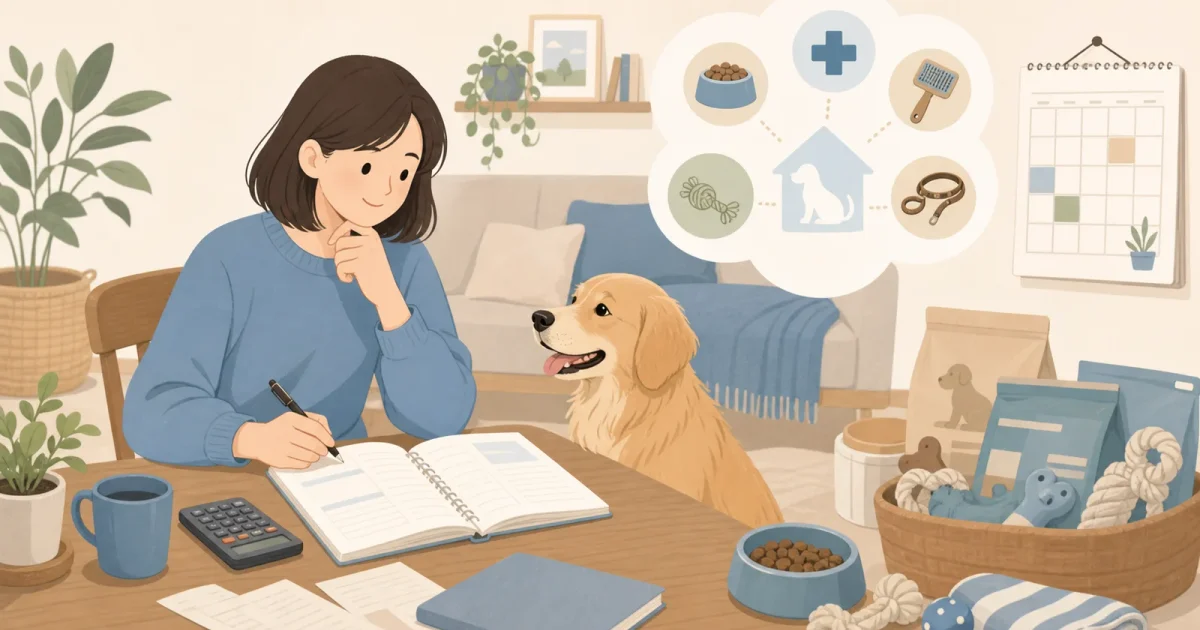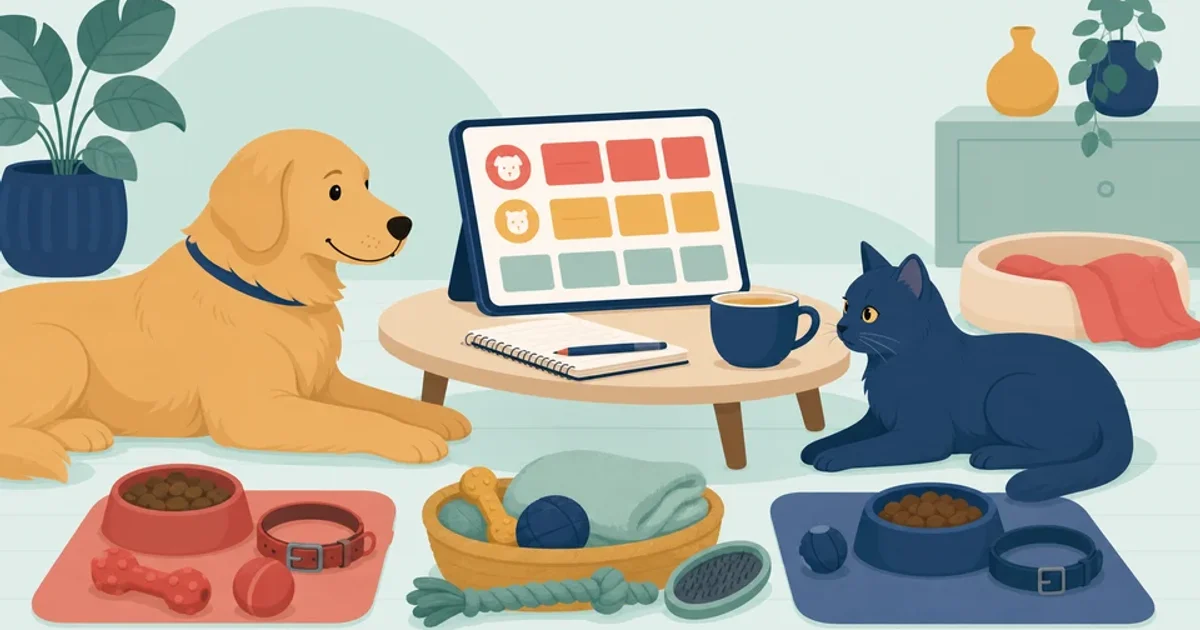
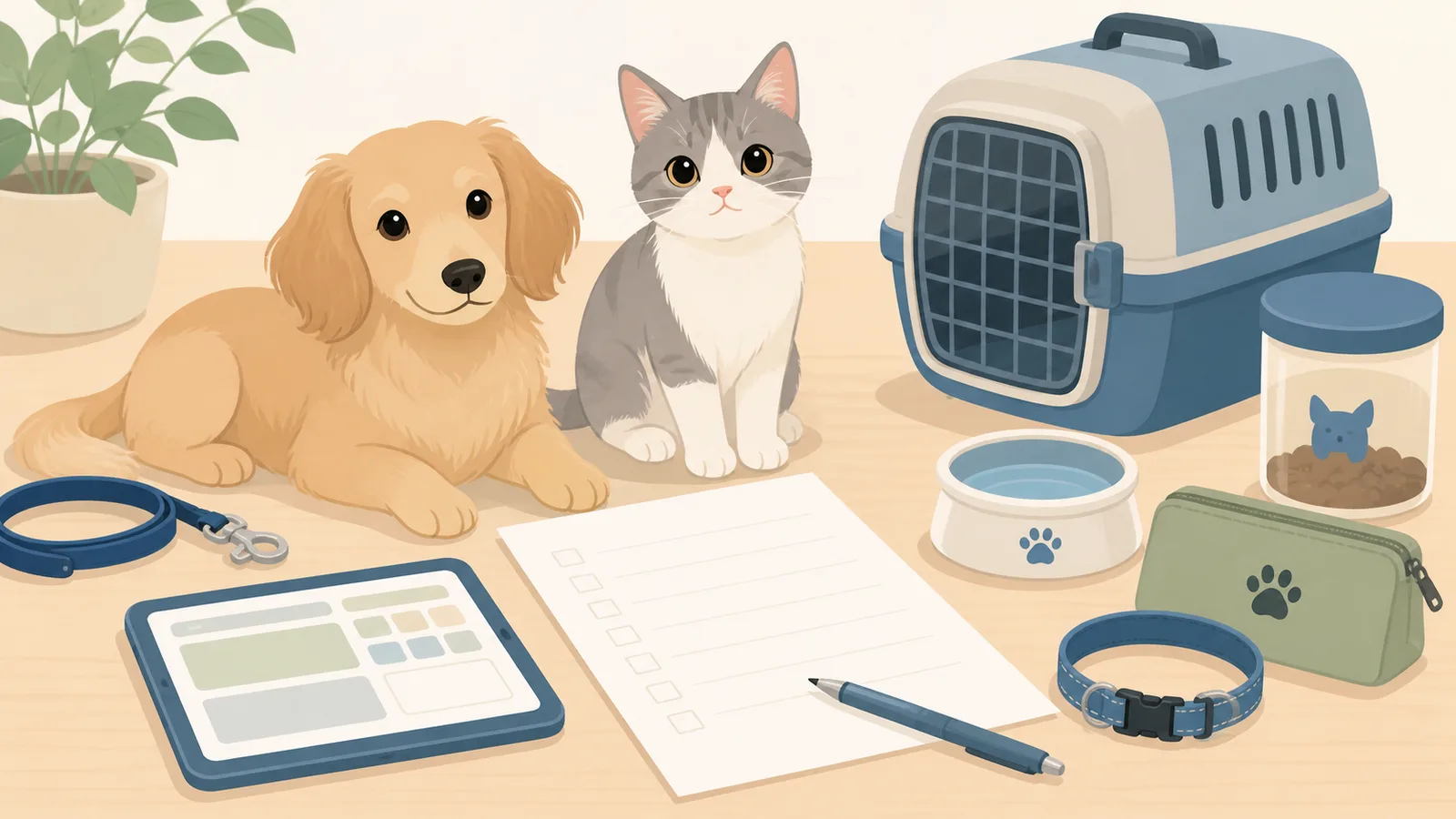
When you add another dog or cat to your household in Japan, the cost does not increase only through food and toilet supplies. Medical reserves, insurance premiums, pet hotel or sitter fees, and home setup costs can also rise. At the same time, not every item simply doubles. Some cleaning supplies or storage items may be shared, while food, preventive care, clinic visits, insurance, and carriers should usually be checked for each animal.
This guide separates the costs to check before keeping two or more dogs or cats into costs that tend to increase, items that may be shared, and items that should be planned per animal.
Key takeaway
Multi-pet costs are hard to judge by simply multiplying the first pet’s costs by two. Food, cat litter, pet sheets, medical and preventive care, insurance, and boarding or sitting costs tend to rise with the number and needs of each animal. Some cleaning supplies and home setup items may be shared.
Before welcoming a second pet, start with these three checks.
- Monthly costs that may increase: food, toilet supplies, insurance, preventive care, and grooming or care items
- Costs to check per animal: medical reserves, vaccination, dog registration and rabies-related procedures, microchip registration or change registration, and insurance
- Costs that can become large suddenly: simultaneous clinic visits, hospitalization, pet hotel or sitter use, moving, and additional home setup
What this guide covers
- Costs that tend to increase when you keep two or more dogs or cats
- Items that may be shared from the first pet and items that should be planned per animal
- Differences between two dogs, two cats, and a dog-and-cat household
- How to think about medical reserves, insurance, and boarding or sitting costs
- A household checklist before welcoming a second pet
Assumptions for this guide
This guide is for households keeping dogs and cats in Japan, and all costs are considered in Japanese yen. The examples for systems and fees are based on public or official information that was checked on May 23, 2026.
Actual costs vary by region, municipality, veterinary clinic, insurer, food type, body size, age, living environment, and service provider. Medical costs, insurance premiums, registration fees, and pet hotel or sitter fees can change, so this guide treats them as items to check before estimating, not as guaranteed amounts. Confirm final costs with your municipality, veterinarian, insurer, and the providers you plan to use.
Overview: costs that increase with multiple pets
In a multi-pet household, some costs increase almost by headcount while other costs may be shared. Start by separating how each cost is likely to grow.

Food and toilet supplies tend to increase, while some cleaning supplies or storage items may be shared.
| Cost item | How it tends to increase | What to check |
|---|---|---|
| Food and treats | Often increases | Species, body size, age, and whether prescription food is needed |
| Cat litter and pet sheets | Often increases | Number of toilets, cleaning frequency, cat compatibility, and dog toilet habits |
| Medical and preventive care | Per animal | Vaccination, prevention, clinic visits, tests, age, and existing conditions |
| Insurance | Per animal if enrolled | Age, coverage, deductibles, pre-existing conditions, renewal terms, and multiple-policy conditions |
| Registration and administrative procedures | Mainly per animal | Dog registration, rabies vaccination certificate tags, microchip registration, and related procedures |
| Grooming and care | Varies by coat and species | Long coat, skin condition, nail trimming, brushing, and shampoo frequency |
| Pet hotel and sitter use | Often increases | Headcount surcharges, shared-room availability, compatibility checks, and peak-season fees |
| Home setup | Often increases at the start | Crates, toilets, beds, escape prevention, air conditioning, and separation space |
Food and consumables are easy to notice because they rise every month. Cleaning supplies, air purifiers, storage, and some emergency-preparedness items may be shared. Even then, hygiene, safety, and compatibility may make it better to separate some items.
Plan toilets, bowls, beds, and evacuation carriers as items that may need to be prepared per animal.
What can be shared from the first pet, and what should not be assumed shared
If you already live with one dog or cat, it is tempting to think the second pet’s initial cost will be lower because you can reuse previous purchases. That may be true for some items, but safety and hygiene-related items should not be assumed shared too aggressively.
Separating shared items from per-animal items helps you decide what to buy first.
| Category | Examples | How to think about it |
|---|---|---|
| Items that are often shareable | Cleaning supplies, storage, a scale, and the outer bag for emergency supplies | They may be shared if hygiene and size are suitable |
| Items to prepare per animal | Bowls, collars or harnesses, leashes, ID tags, beds, and carriers | Body size and safety differ, so check them separately |
| Consumables that increase by headcount | Food, treats, cat litter, pet sheets, and poop bags | These often connect directly to monthly fixed costs |
| Items that increase depending on the situation | Crates, toilets, scratching posts, fences, and escape-prevention items | The needed number depends on compatibility, the home, and time spent alone |
For cats especially, too few toilets or poorly placed toilets can lead to accidents or stress. For dogs, you may need separate spaces during time alone or separate feeding areas. Check not only the cost, but also where each item will go and how easy it will be to clean.
Checks that differ between two dogs, two cats, and a dog-and-cat household
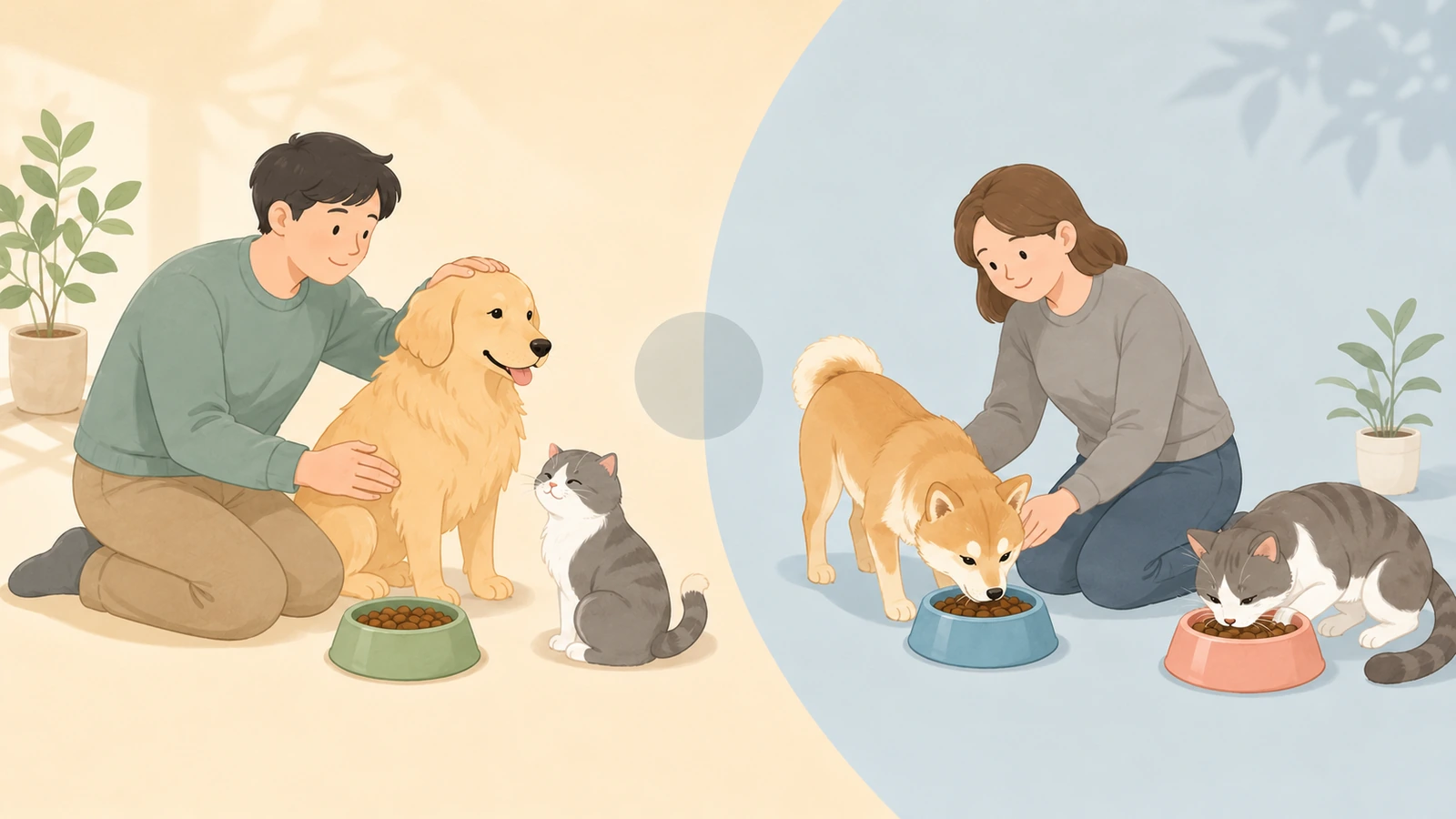
The types of costs that increase differ depending on whether you keep dogs only, cats only, or dogs and cats together. Even when the headcount is the same, required supplies and procedures can differ, so it is safer not to compress everything into one rough amount.

Two dogs, two cats, and a dog-and-cat household can each increase different cost items.
If you keep two dogs
With two dogs, check food, walking items, preventive care, clinic visits, registration, pet hotel use, and grooming. Even two small dogs can have different food and care costs depending on age, body size, and coat type.
Dog registration and rabies-related procedures are also handled through municipalities. For example, Chuo City in Tokyo lists a dog license tag issuance fee of ¥3,000 per dog when the dog does not have a microchip, and a rabies vaccination certificate tag issuance fee of ¥550 per dog. [3] Actual fees and procedures should be confirmed with your own municipality.
If you keep two cats
With two cats, it is important not to overlook food, litter, toilets, scratching items, carriers, medical reserves, insurance, and air conditioning. Even indoor-only cats can require spending on toilets, scratching posts, escape prevention, and room temperature control.
Do not assume that the first cat’s toilet can always be shared. Depending on age differences and compatibility, you may need separate toilets, feeding places, or beds.
If you keep one dog and one cat
When living with both a dog and a cat, food, toilet supplies, training or care items, and boarding options often need to be managed separately. Dog food and cat food should be stored and served separately so one animal does not routinely eat the other’s food.
The pattern of costs is also different: dogs have walking items and registration-related checks, while cats have litter, toilet setup, and escape-prevention needs. For a dog-and-cat household, it is usually clearer to check the dog cost table and the cat cost table separately instead of treating the situation as simply “two pets.”
Administrative procedures and microchip information should be checked per animal
In a multi-pet household, registration and change procedures should also be checked per animal. Japan’s Ministry of the Environment explains that dog and cat microchip registration or change registration fees are ¥400 for online applications and ¥1,400 for paper applications. Reissuing a registration certificate is ¥300 online or ¥1,300 by paper application. Notification of changes to registered details is described as free of charge. [2]
Some municipalities apply a special rule that treats the microchip identification number of a dog registered with the Ministry of the Environment’s designated registration organization as the dog license tag. Shibuya City explains that when the owner’s microchip information is updated, a separate application at the ward office is not required. [4]
Microchip procedures, dog registration, and rabies vaccination certificate tags can be handled differently depending on the municipality and registration status, so check official information before welcoming a second pet.
Household checklist before welcoming a second pet

Before welcoming a second pet, separate monthly costs, initial purchases, and annual or occasional reserves.
Monthly fixed costs
- Have you estimated food costs for both animals?
- Have you included additional cat litter, pet sheets, poop bags, and other consumables?
- If you plan to use insurance, have you checked premiums for both animals?
- Have you estimated grooming, nail trimming, shampoo, and similar care costs?
- Have you considered air conditioning, cleaning, laundry, and deodorizing supplies?
Initial purchases and items to buy again
- Will bowls, beds, carriers, collars or harnesses, and leashes be prepared separately?
- Do you need a crate or separation space?
- Do you need more toilets or scratching items?
- Do you need escape prevention, swallowing-risk prevention, or storage changes?
- Can you prepare emergency supplies for the number of animals in the household?
Annual and occasional costs
- Have you considered vaccination, prevention, checkups, and clinic-visit reserves for each animal?
- For dogs, have you checked registration and rabies-related procedures?
- Have you checked microchip registration or change registration fees?
- Have you estimated pet hotel or sitter costs for travel, hospitalization, or work trips?
- Have you considered the possibility that costs may rise for more than one animal in senior years?
Medical reserves, insurance, and boarding costs should be planned per animal
Medical reserves and boarding or sitting costs are easy to underestimate in multi-pet planning. Anicom’s 家庭どうぶつ白書2025 includes data on dog and cat veterinary costs, treatment categories, and age-related veterinary cost information. [5] However, insurer data is based on contract and claim data, so it should not be treated as a guaranteed average for every dog or cat.
The important point is not to predict the exact amount, but to hold separate reserves for each animal. A young dog and a senior dog, or a healthy cat and a cat with an existing condition, may need different levels of preparation even in the same household.
The same caution applies to insurance. If you enroll, check age conditions, coverage, deductibles, pre-existing condition handling, renewal conditions, and rules for multiple policies. This guide does not recommend any specific insurance product.
Pet hotels and sitters can also cost more when the number of animals increases. Whether animals can stay in the same room, whether they are treated as separate rooms, whether there is an added fee, and whether peak-season pricing applies all vary by provider. Use the related tools area near the bottom to organize dog and cat cost calculators separately, and check pet hotel or sitter costs when travel or emergency stays are realistic for your household.
How to estimate multi-pet costs
Instead of trying to produce one exact answer, separate the estimate into steps.
- Check the annual cost for the first dog or cat.
- Add the second pet’s food, consumables, and medical reserve separately.
- Before subtracting any shared items, start with a safer, higher estimate.
- Put pet hotel, sitter, and other occasional costs in a separate annual reserve.
- Finally, check whether the monthly amount is sustainable.
For dog-only multi-pet households, start with dog costs. For cat-only households, start with cat costs. For a dog-and-cat household, calculate the dog and cat portions separately to reduce omissions. You can use the related tools area near the bottom to review the dog and cat annual cost calculators separately, then compare the added monthly and first-year costs with this checklist.
To organize your own monthly increase and first-year added costs, use the multi-pet cost calculator. It works from the amounts you enter and does not estimate medical or insurance costs automatically.
Open the multi-pet cost calculator
FAQ
Does multi-pet ownership simply cost twice as much?
No. Food, consumables, medical and preventive care, insurance, and boarding or sitting costs often increase, while some cleaning supplies or home setup items may be shared. It is safer to estimate conservatively at first and adjust later based on actual costs.
Can the second pet’s initial cost be lower?
It can be lower if some items are safely shared. However, bowls, carriers, collars or harnesses, beds, toilets, and crates may need to be prepared separately for safety and hygiene.
How should I estimate costs when keeping both a dog and a cat?
Check dog costs and cat costs separately because the required supplies and procedures differ. For dogs, review walking items and registration or rabies-related procedures. For cats, review litter, toilets, escape prevention, and air conditioning.
Is pet insurance always necessary in a multi-pet household?
It is not possible to say that it is always necessary. Whether you enroll or not, you need a plan for clinic visits, tests, surgery, hospitalization, and other unexpected costs. If you consider insurance, check coverage, deductibles, age conditions, pre-existing condition handling, and renewal conditions.
What should I check first before welcoming a second pet?
Check not only money, but also time, living space, compatibility, and emergency response. Consider whether you can handle simultaneous clinic visits, evacuation, time alone, and pet hotel use for more than one animal.
Notes and disclaimer
This guide provides general information for organizing cost items related to keeping multiple dogs or cats. It does not provide individual medical, insurance, legal, contract, training, or pet-ownership decisions.
Actual costs vary by region, municipality, veterinary clinic, insurer, food, body size, age, living environment, and service content. For dog registration, rabies-related procedures, microchip information registration, and pet hotel or sitter fees, always check the latest official information and the provider you plan to use.
References and information checked
| No. | Source / page | How it was used in this guide | Checked |
|---|---|---|---|
| [1] | 一般社団法人ペットフード協会「令和7年(2025年)全国犬猫飼育実態調査」 | Used to check dog and cat ownership, feeding, spending items, and survey items related to multi-pet ownership. | 2026-05-23 |
| [2] | 環境省「犬と猫のマイクロチップ情報登録について」 | Used to check microchip registration, change registration, and certificate reissue fees. | 2026-05-23 |
| [3] | 東京都中央区「犬の登録と狂犬病予防注射について」 | Used as a municipal example of dog registration and rabies vaccination certificate tag fees. | 2026-05-23 |
| [4] | 東京都渋谷区「犬や猫のマイクロチップ登録制度について」 | Used as an example of the relationship between microchip registration and municipal dog procedures. | 2026-05-23 |
| [5] | アニコム損害保険株式会社「家庭どうぶつ白書2025」 | Used as supporting information for why medical reserves should be considered per dog or cat, including veterinary cost and age-related data. | 2026-05-23 |