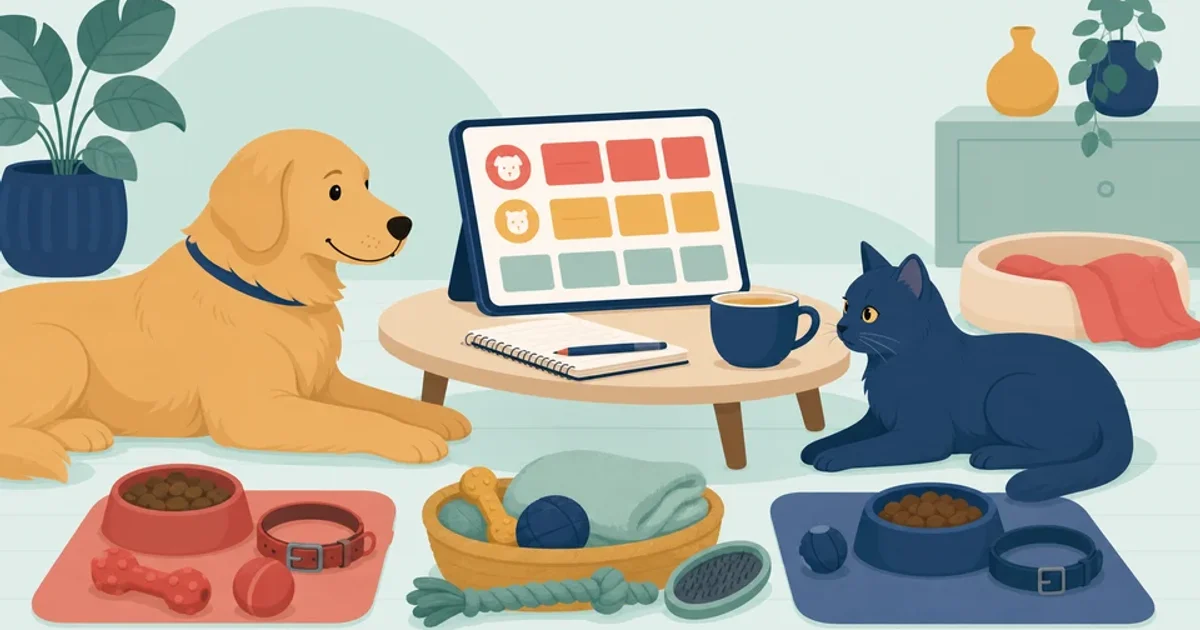
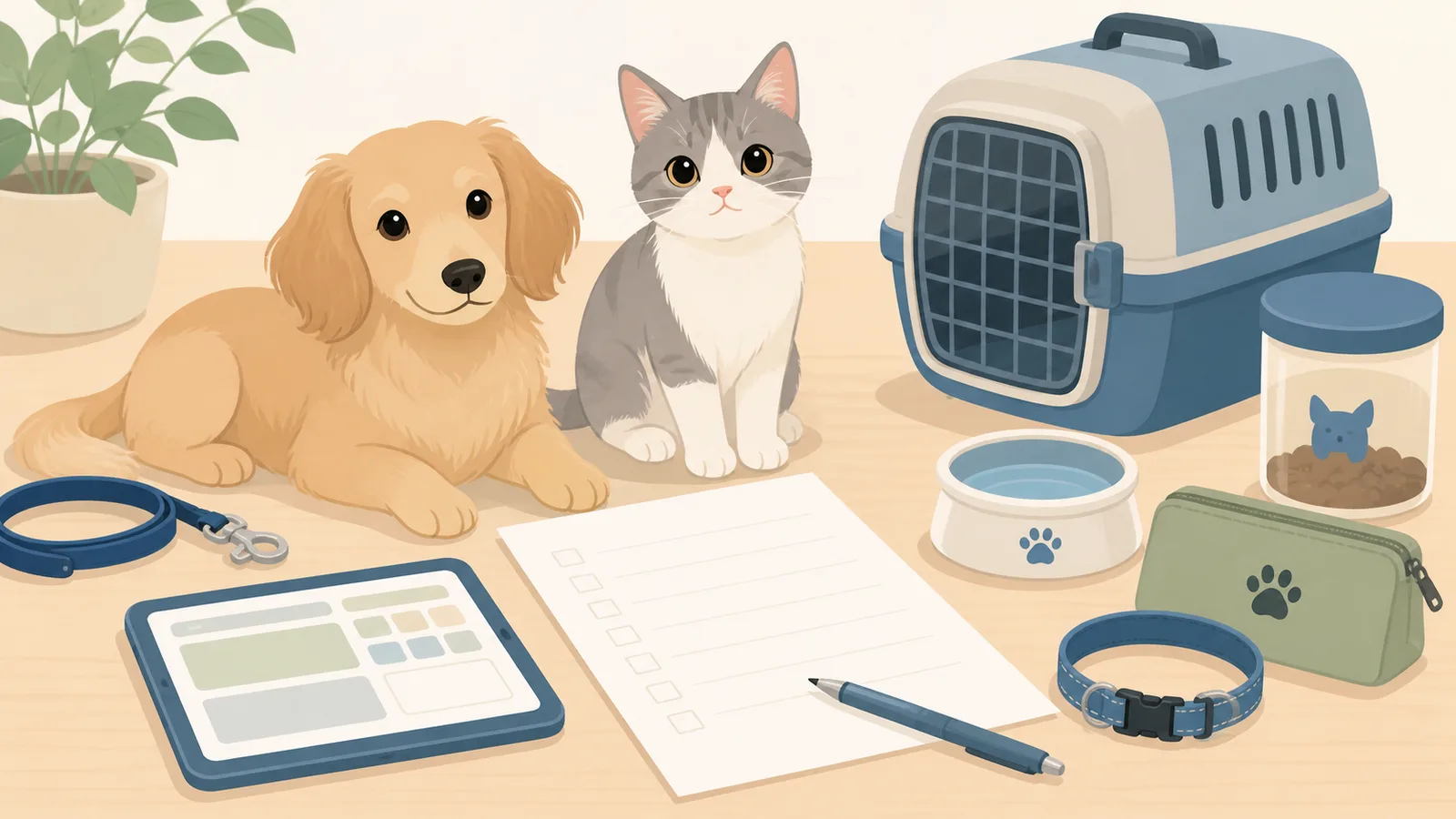
If you are preparing to welcome a cat in Japan, the practical question is not only the adoption or purchase cost. You also need to plan for setup supplies, food, litter, a carrier, scratching items, vaccination, spay or neuter costs, microchip registration, clinic visits, insurance, and temporary care during travel.
This guide is for English readers who need Japan-based assumptions. It does not replace Japanese prices, procedures, or source notes with overseas information. The amounts below are planning references, not guaranteed prices.
What this guide covers
- Initial supplies to prepare before welcoming a cat
- Monthly food, treats, litter, and consumables
- Vaccination, spay or neuter costs, microchip registration, and medical reserves
- How to think about pet insurance as a budget item
- A household checklist for first-year and ongoing costs
Start With First-Year and Ongoing Costs
Cat costs are easier to understand when you separate the first year from later years.
| Category | Examples | How to think about it |
|---|---|---|
| Initial costs | Litter box, litter, carrier, bowls, scratching items, cage, bed | Often happens before or soon after welcoming the cat |
| Monthly costs | Food, treats, litter, consumables, insurance premiums | Works like a recurring household cost |
| Annual or irregular costs | Vaccination, checkups, spay or neuter costs, clinic visits, temporary care | Should be planned over the year even when it is not monthly |
Anicom Sompo’s 2025 pet spending survey reported annual spending of ¥195,427 for cats and ¥47,130 for treatment costs. The survey was based on policyholder responses, so it should be treated as a reference point rather than the average for every cat owner[1].
One Japanese household goods manufacturer’s cost example shows food and treats around ¥2,000 to ¥6,000 per month, litter around ¥500 to ¥1,000 per month, and vaccination around ¥5,000 to ¥7,500 per year[2]. Use these kinds of public examples as starting points, then adjust for your home, products, and clinic.

Dedicated tool
Cat cost calculator for Japan
Enter setup supplies, monthly food and litter, medical and procedure costs, and reserves to estimate first-year and ongoing annual costs.

Separating timing helps you see the difference between first-year and ongoing costs.
Initial Supplies and Procedure Costs
Initial costs can include a litter box, litter, carrier, bowls, scratching items, toys, cage or cat tower, bed, cleaning supplies, and home safety items.
| Item | Planning note |
|---|---|
| Bowls and water setup | Shape and material affect the price |
| Litter box and litter | System toilets and ordinary litter boxes have different running costs |
| Carrier | Needed for clinic visits and travel |
| Brush and scratching items | You may need more than one scratching location |
| Cage or cat tower | Depends on the home layout and safety needs |
| Bed | Some cats may not use one, so priority can be adjusted |
For initial supplies alone, a rough setup range such as ¥20,000 to ¥60,000 can be useful. However, vaccination, spay or neuter costs, microchip registration, and first clinic visits may happen around the same time. Keep purchase price, adoption fee, transport, and housing-related costs separate.
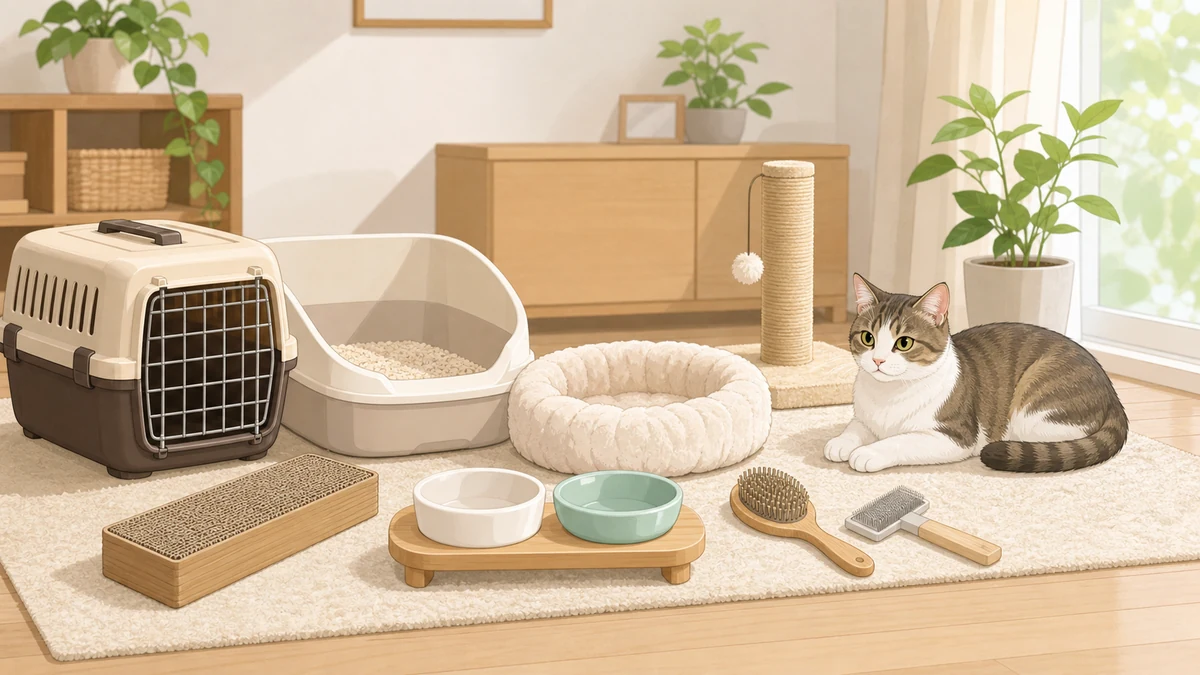
Start with high-priority health, safety, hygiene, and daily care items.
Microchip Registration
In Japan, microchipping became mandatory for dogs and cats sold by breeders and pet shops from June 2022. The new owner may need to update the registered owner information[3].
Microchip implantation fees vary by clinic and are often described as several thousand yen to around ¥10,000. Registration or change registration fees are listed as ¥400 for online application and ¥1,400 for paper application[3].
If you welcome a rescue or transferred cat, confirm whether the microchip is already implanted, which registry is used, and whether a change registration is needed.

The procedure depends on how the cat comes into your household.
Medical Costs and Reserves
Cat medical costs should be separated into preventive or annual items and unexpected clinic visits.
Tokyo clinic price examples used in the Japanese article include three-way cat vaccination examples around ¥3,850 to ¥4,500 and five-way vaccination examples around ¥5,500 to ¥7,500[4][5]. Prices vary by clinic, tax treatment, timing, and the cat’s condition.
Spay or neuter surgery can also be a significant first-year item. Public Tokyo clinic examples used in the Japanese article include neuter examples around ¥13,000 to ¥16,500 and spay examples around ¥21,000 to ¥27,500[4][5]. Pre-operation tests, medicine, hospitalization, and collars may be billed separately.
Do not decide vaccination timing, surgery timing, or medical care based only on cost. Discuss the cat’s age, health condition, and living environment with a veterinarian.
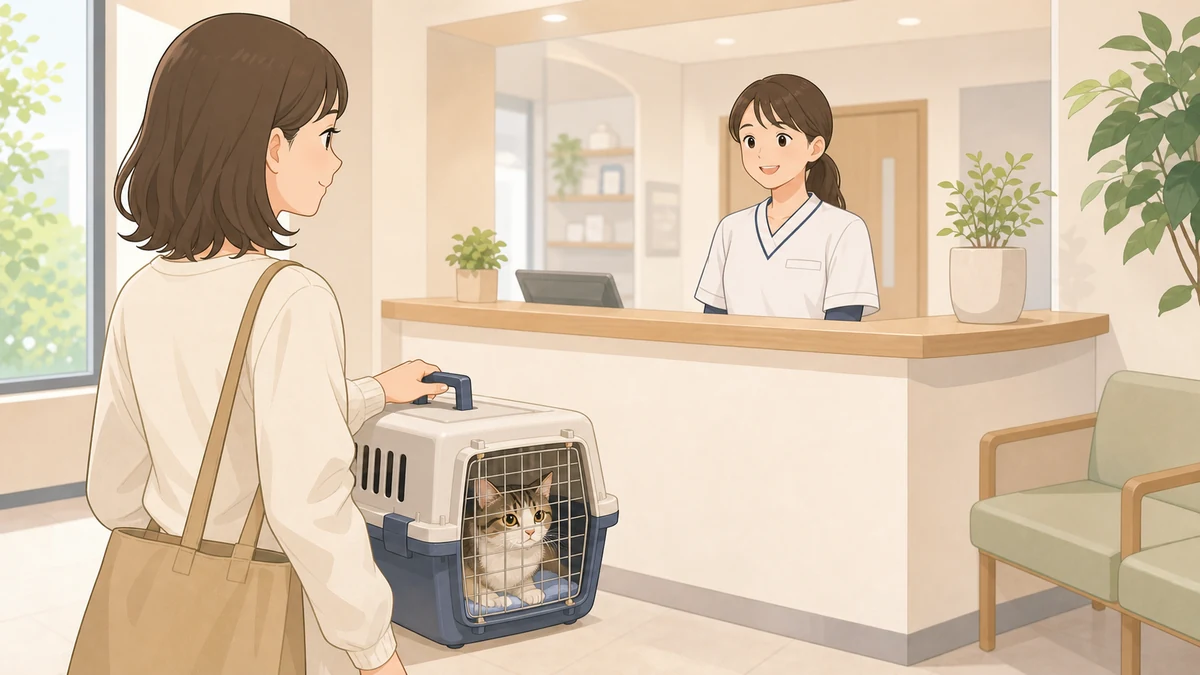
Separate preventive planning from unexpected clinic costs.
Monthly Food and Litter Costs
Monthly costs usually center on food, litter, and consumables.
| Monthly item | What changes the amount |
|---|---|
| Food | Age, weight, food type, and whether prescription food is needed |
| Treats | Frequency and amount |
| Litter and toilet supplies | Toilet type, number of cats, and replacement frequency |
| Care items | Brushes, nail clippers, odor-control items, and cleaning supplies |
| Insurance premium | Only if you choose to include insurance in the budget |
The manufacturer’s example noted above gives food and treats around ¥2,000 to ¥6,000 per month and litter around ¥500 to ¥1,000 per month[2]. Treat these as editable planning references, not a guarantee.

Monthly costs are easiest to plan as recurring household expenses.
Insurance Checks
This article does not decide whether you should buy pet insurance. If you compare policies, separate the premium from the coverage conditions.
| Check item | What to review |
|---|---|
| Monthly premium | Whether it changes as the cat ages |
| Reimbursement ratio | How 50%, 70%, or other ratios affect your out-of-pocket cost |
| Deductible or copayment rules | Per-visit and annual conditions |
| Exclusions | Preventive care, vaccination, spay or neuter costs, pre-existing conditions |
| Waiting period | Whether immediate coverage is limited after enrollment |
| Renewal conditions | Whether age or claim history can affect renewal |
Insurance is not simply “better” because it is expensive or “worse” because it is cheap. Read the official important matters explanation and policy terms, and ask the insurer when conditions are unclear.

Review policy conditions, not only the premium.
Household Checklist
When planning cat costs, separate the total by payment timing.
| Check | What to confirm |
|---|---|
| Can you handle the first month? | Initial supplies, first clinic visit, registration, vaccination |
| Can you handle monthly fixed costs? | Food, litter, consumables, and insurance if included |
| Can you plan annual costs? | Vaccination, checkups, and reserves |
| Can you prepare for sudden clinic visits? | How you would handle several tens of thousands of yen |
| Have you planned temporary care? | Pet hotel, sitter, family support, or travel plans |
| Are there home-related costs? | Scratching protection, escape prevention, flooring or furniture protection |
Buying too many items at the beginning can create waste. Start with the essentials, then add items based on the cat’s behavior and your home.
Plan by payment timing, not only by annual total.
Costs You Should Not Cut Too Far
It is reasonable to control costs, but cutting health and safety items too aggressively can create larger costs later. Be careful with:
- Complete and balanced food appropriate for the cat’s age and condition
- Clean litter and toilet supplies
- A safe carrier for clinic visits
- Vaccination, health checks, and clinic visits when the cat is unwell
- Escape prevention, ingestion prevention, and scratching protection
Design-focused furniture, large items you are not sure the cat will use, and duplicate products for the same purpose can often wait until you know the cat’s habits.
Summary
Cat ownership costs in Japan look different in the first year and in later years. The first year can include setup supplies, first clinic visits, vaccination, microchip procedures, and spay or neuter costs close together. Later years are shaped more by food, litter, consumables, medical reserves, and insurance choices.
Do not rely on one average number. Separate initial costs, monthly costs, and annual or irregular costs, then adjust the plan for your home, the cat’s age and condition, product choices, and clinic information.
References / Checked Information
| No. | Source / page title | Used for | Checked date |
|---|---|---|---|
| [1] | アニコム損保「2025最新版 ペットにかける年間支出調査」 | Cat annual spending, treatment cost, and survey context | 2026-05-18 |
| [2] | アイリスオーヤマ +1 Day「猫を飼いたい時に準備すべきものは?」 | Initial supplies, food and treats, litter, and vaccination cost examples | 2026-05-18 |
| [3] | 日本動物愛護協会「マイクロチップについて」 | Microchip implantation, registration and change registration fees, and system overview | 2026-05-18 |
| [4] | はせがわ動物病院「料金案内」 | Tokyo clinic examples for cat vaccination, neuter, and spay costs | 2026-05-18 |
| [5] | 聖母坂どうぶつ病院「診療内容・料金」 | Tokyo clinic examples for cat vaccination, neuter, spay, and pre-operation test costs | 2026-05-18 |