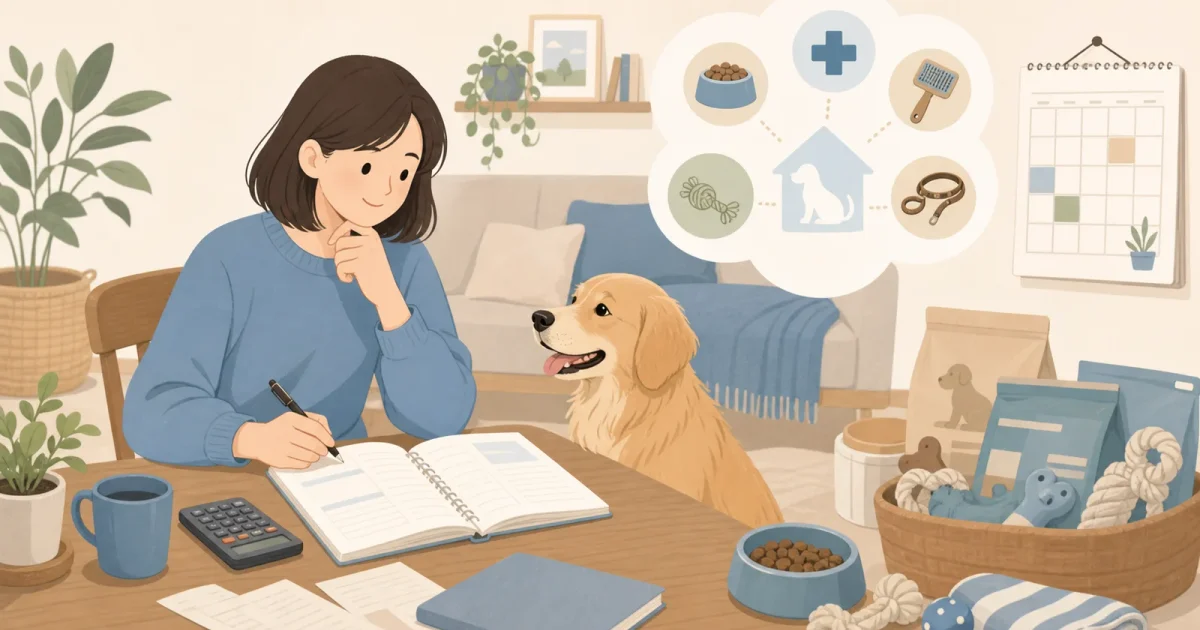

If you are preparing to own a dog in Japan, the difficult question is not only “How much is the dog?” It is also whether your household can absorb the setup costs, recurring monthly costs, annual procedures, and unexpected expenses that come after adoption or purchase.
This guide is for English readers who need Japan-based assumptions. It does not use U.S. prices or U.S. pet ownership rules. The examples below are planning references based on Japanese public information and provider price examples checked for the original Japanese article.
What this guide covers
- First-year setup costs
- Monthly food, consumables, care items, and insurance premiums
- Registration, rabies vaccination tags, and microchip registration in Japan
- Preventive care, health checks, grooming, and pet hotel costs
- Why small, medium, and large dogs can have different cost profiles
- A checklist to review before welcoming a dog
Start With Cost Categories, Not One Total
Dog ownership costs are easier to plan when you separate them into three buckets.
| Category | Examples | How to think about it |
|---|---|---|
| Initial costs | Crate or indoor pen, toilet supplies, carrier, leash, food bowls, bedding, local procedures | Often happens before or soon after welcoming the dog |
| Monthly costs | Food, treats, toilet sheets, consumables, care items, insurance premiums | Works like a recurring household cost |
| Annual or irregular costs | Preventive care, health checks, grooming, pet hotel stays, emergency reserve | Does not always occur monthly, but should be planned over the year |
Looking only at the annual total can hide the timing problem. A household may be able to handle ordinary food costs but still struggle when setup items, registration, preventive care, and emergency costs happen close together.
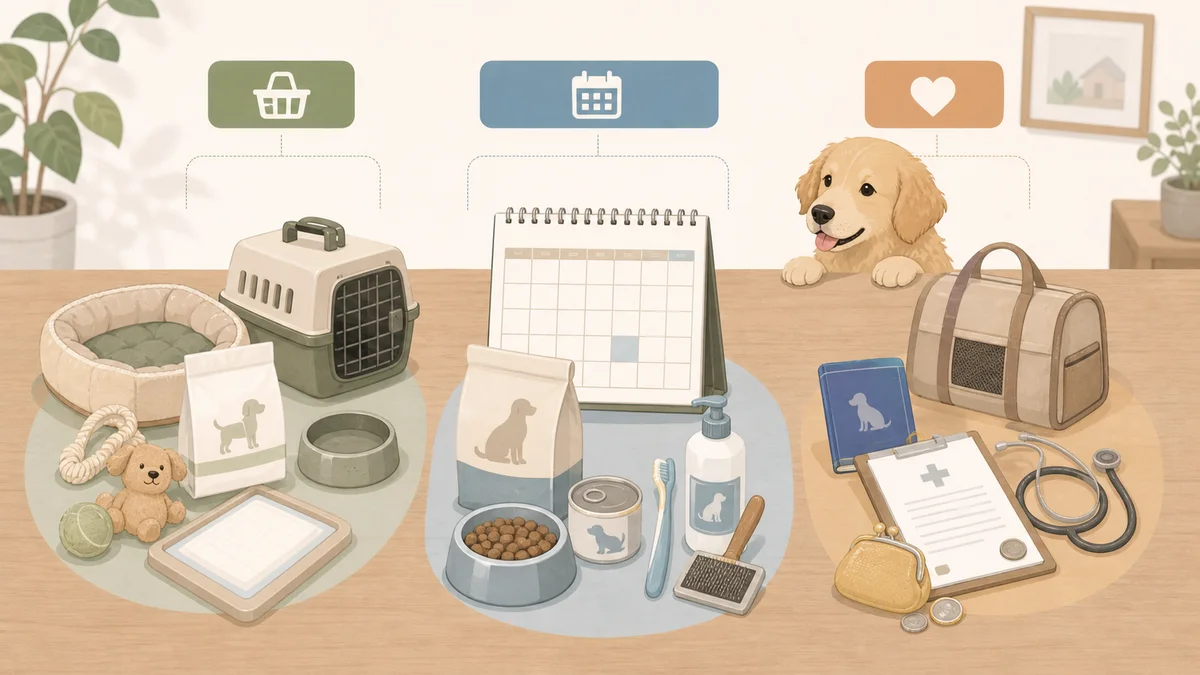
Separate the timing of costs instead of looking only at one annual total.
Initial Costs

Prioritize items tied to health, safety, hygiene, and daily care.
Initial costs can include a crate or indoor pen, toilet tray and sheets, carrier, leash or harness, food and water bowls, bedding, cleaning supplies, and safety items for the home.
For planning, a rough setup range such as ¥15,000 to ¥60,000 can be useful, depending on whether you buy only essentials or choose higher-quality items from the beginning. Actual prices change by store, product quality, dog size, and whether you already own some items.
Local Procedures in Japan
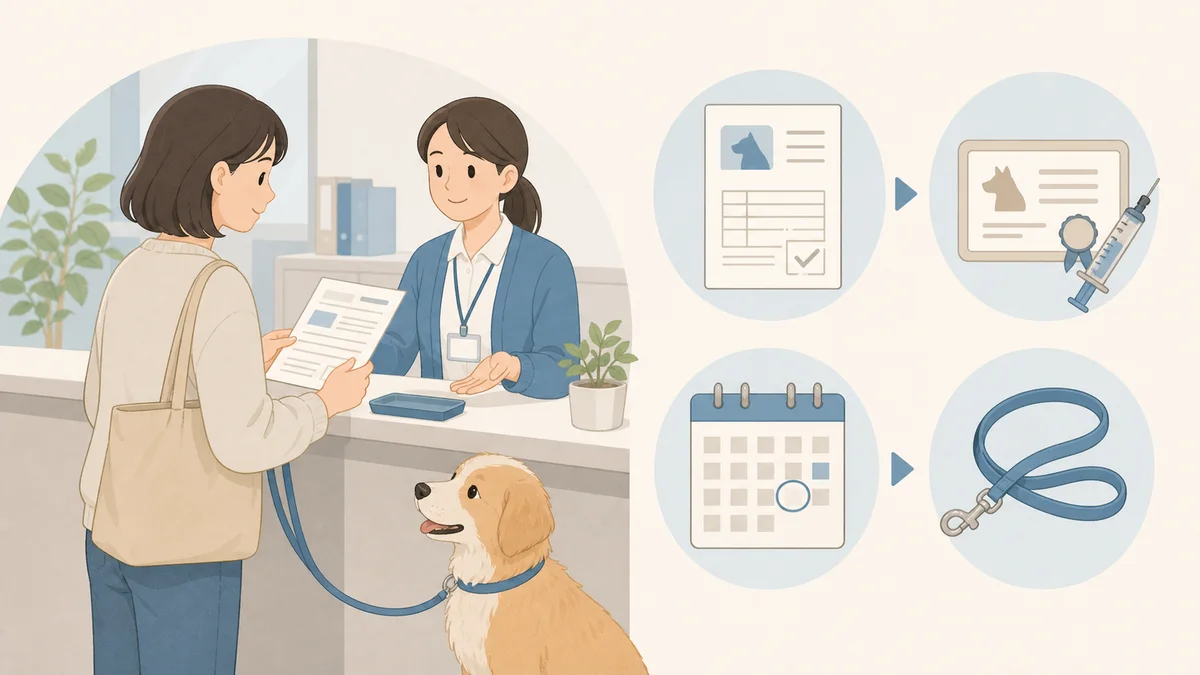
Check municipality procedures and application methods before estimating local fees.
In Japan, dog owners need to check local registration and rabies vaccination procedures with their municipality. Fees differ by municipality. The original Japanese article used public examples from Tokyo municipalities, including dog registration examples around ¥3,000 and local fee examples related to rabies vaccination tags.
Microchip registration is also a separate item to consider. Japan’s Ministry of the Environment publishes information about dog and cat microchip registration, including online and paper application fee examples.
These are administrative costs, not medical treatment costs. Confirm the latest procedure with your municipality and the official microchip registration information.
Monthly Costs

Monthly costs should be planned as recurring household expenses.
Monthly costs often include:
- Food and treats
- Toilet sheets and waste bags
- Cleaning and odor-control supplies
- Care items such as shampoo, brushes, ear care, and dental care goods
- Pet insurance premiums, if you choose to include them
Food costs vary strongly by dog size, food type, age, and health condition. Treat the calculator’s default values as editable starting points, not as recommendations.

Food and consumables vary by dog size, product choice, and replacement frequency.
Preventive Care and Medical Costs
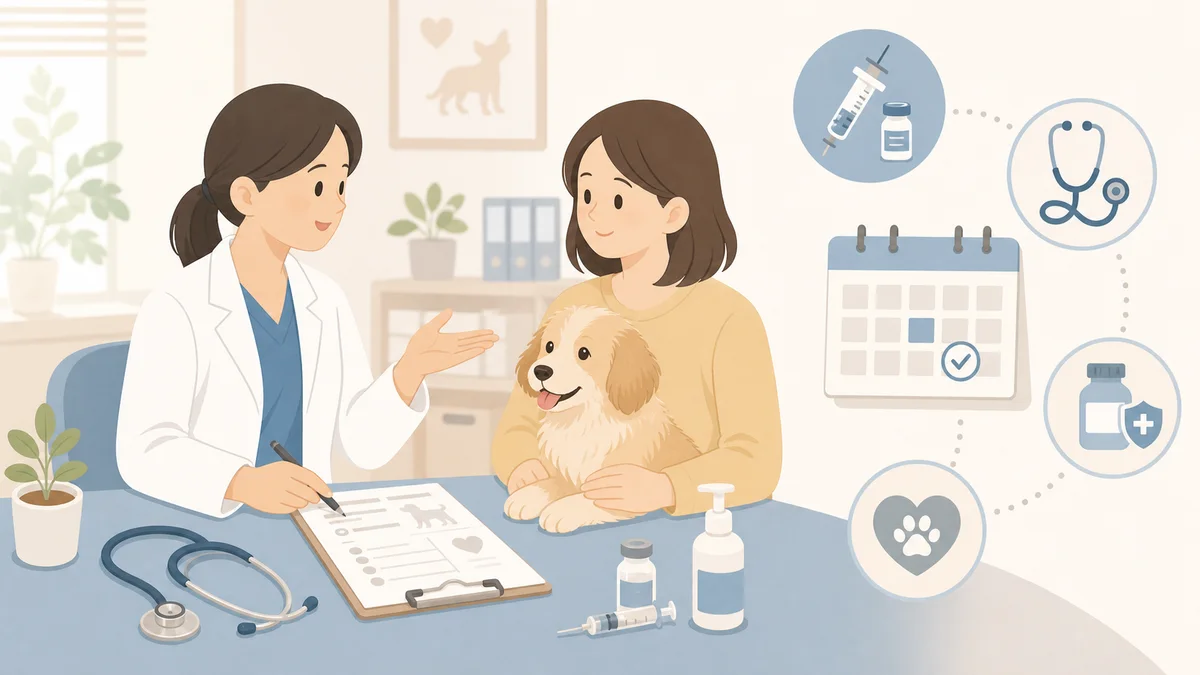
Medical and preventive care costs vary by clinic and care content.
Preventive care can include vaccinations, health checks, parasite prevention, and other clinic visits. Costs differ by clinic and by the dog’s condition.
This article does not diagnose disease, recommend treatment, or judge whether a procedure is necessary. For medical decisions, consult a veterinarian and check the clinic’s current price information.
Pet Insurance

Review coverage scope and exclusions, not only monthly premiums.
Pet insurance may reduce some future out-of-pocket costs, but it also adds monthly premiums and policy conditions. Premiums vary by age, breed or classification, reimbursement percentage, coverage limits, waiting periods, exclusions, and insurer.
Do not decide based only on the monthly premium. Check coverage scope, exclusions, renewal rules, age-related changes, and your household’s ability to pay unexpected costs without insurance.
Grooming and Care Services

Grooming and care costs depend on breed, coat type, size, and service frequency.
Grooming costs depend on breed, coat type, size, salon, course contents, and frequency. Long-haired breeds or dogs that need regular trimming can have higher annual grooming costs than a short-haired dog with minimal salon needs.
For planning, enter the cost per visit and expected number of visits per year rather than assuming grooming is a monthly fixed cost for every dog.
Pet Hotel and Travel-Related Costs
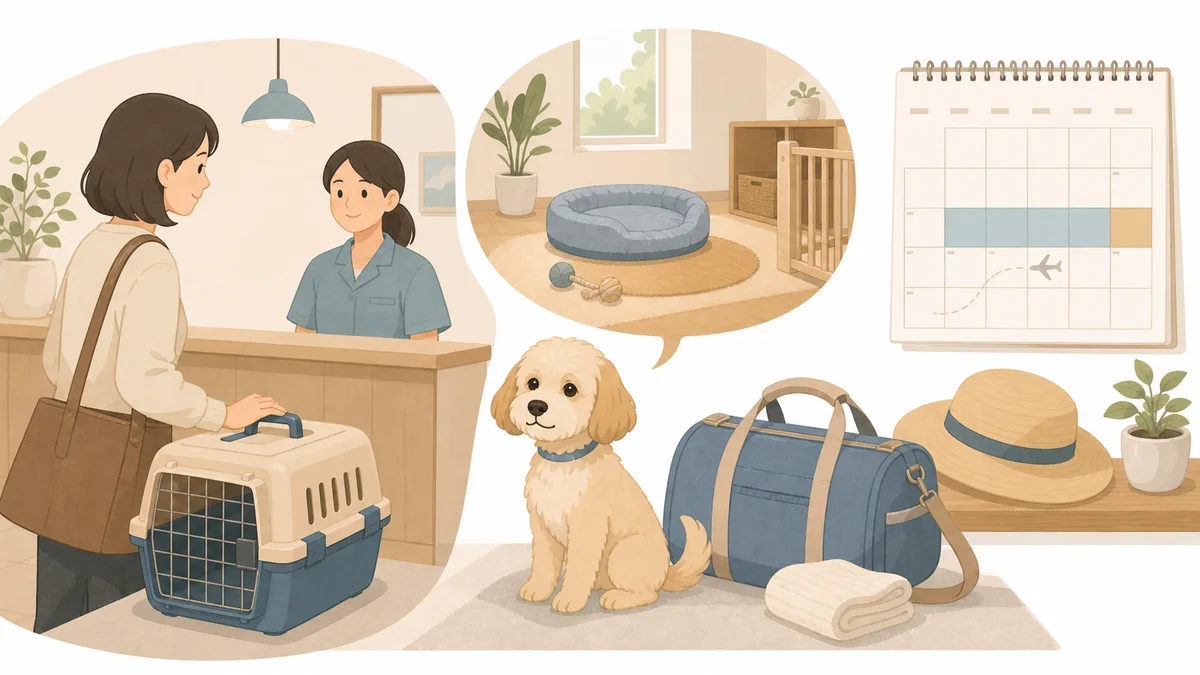
If travel or emergency stays are realistic, include boarding costs in the annual plan.
Pet hotel costs matter if you travel, visit family, face emergencies, or cannot care for the dog at home for a short period. In Japan, “pet hotel” usually means a short-stay boarding service for pets. Prices vary by dog size, room type, facility, location, and season.
If this is realistic for your household, include a few nights per year in your estimate. Also check cancellation rules, required vaccines, check-in conditions, and what you need to bring.
Costs That Vary by Dog Size and Living Situation
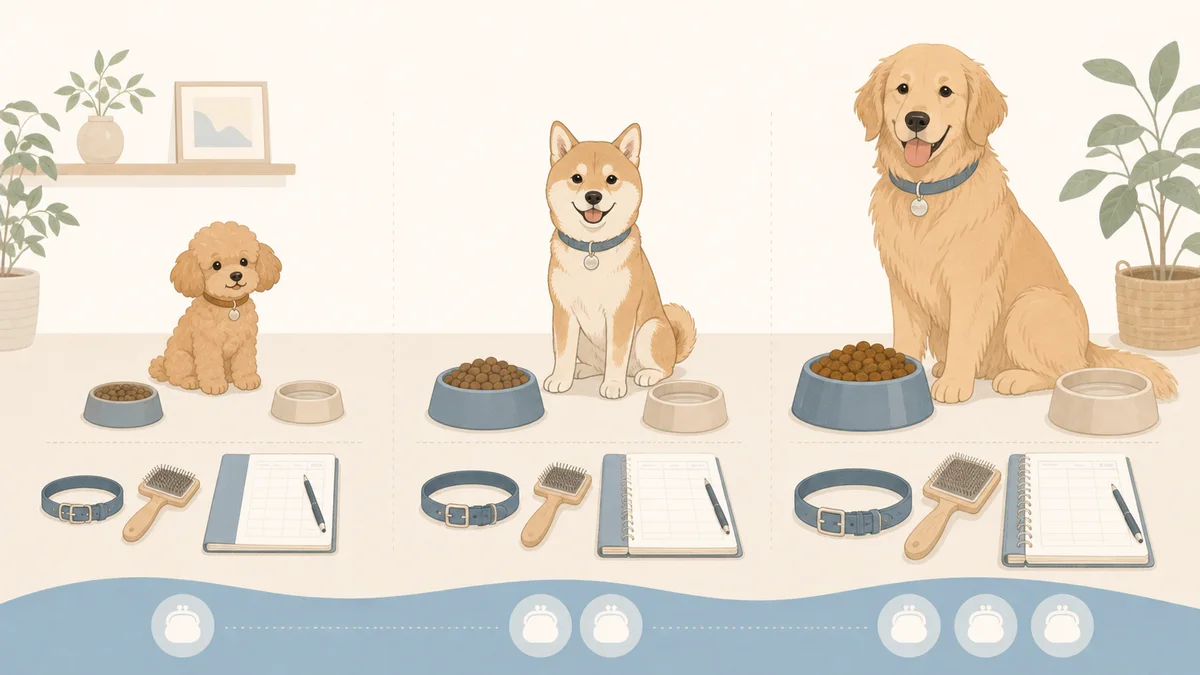
Dog size can change food amounts, supply sizes, grooming, hotel pricing, and transportation choices.
Dog size can affect food amount, product size, hotel pricing, grooming pricing, and transportation options. However, “small dog” does not automatically mean “cheap,” and “large dog” does not automatically mean “expensive” in every category.
Costs can also change with:
- Age and health condition
- Breed and coat type
- Indoor living setup
- Rental housing or condominium rules
- Access to a car or public transportation
- Local clinic, salon, and hotel prices
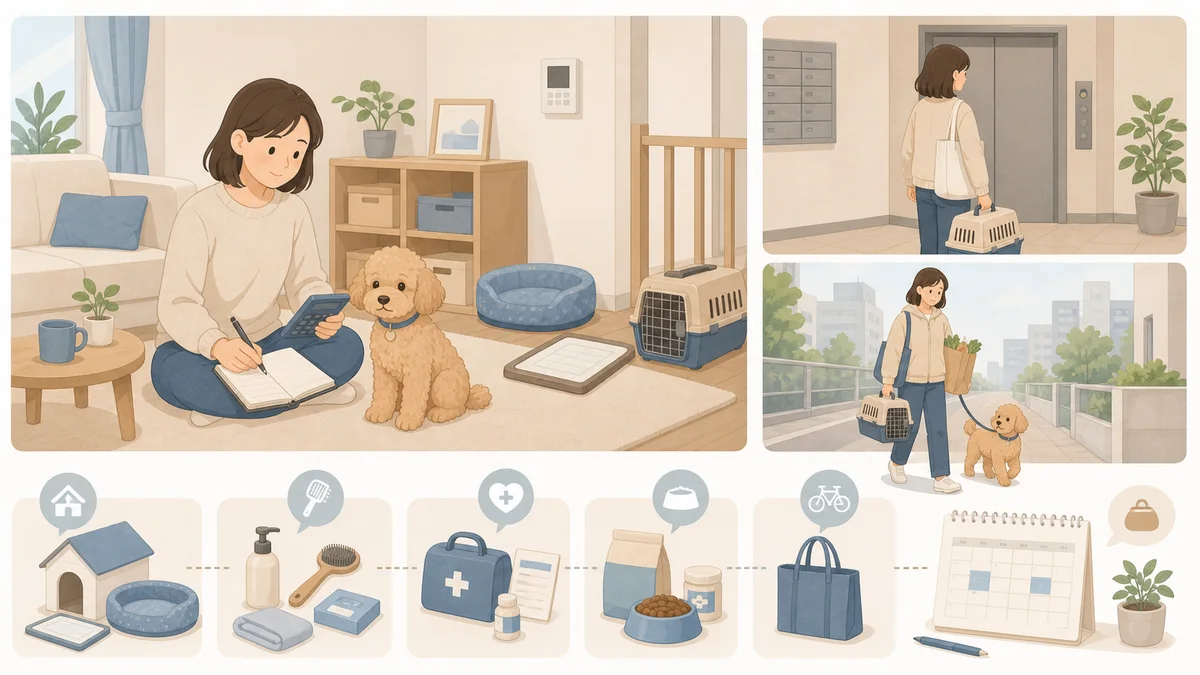
Living environment and transportation options can also affect cost planning.
What Not to Cut Too Far
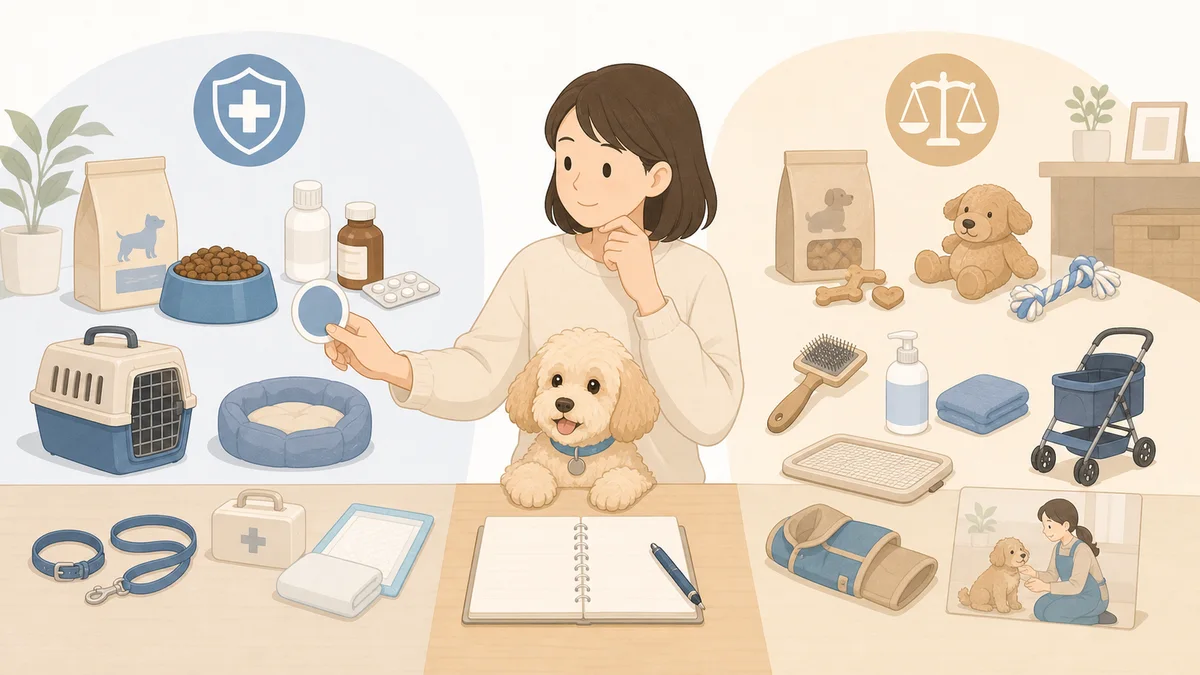
When reducing costs, protect items tied to health, safety, and hygiene first.
Cost control matters, but be careful with categories tied to health, safety, and hygiene.
Avoid cutting too aggressively on:
- Appropriate food
- Preventive care and vaccinations
- Emergency medical readiness
- Indoor safety items
- Walking and transportation essentials
- Cleaning and hygiene supplies
You may be able to save money on seasonal goods, duplicate items, unused toys, or services you do not actually need.
Pre-Adoption Checklist
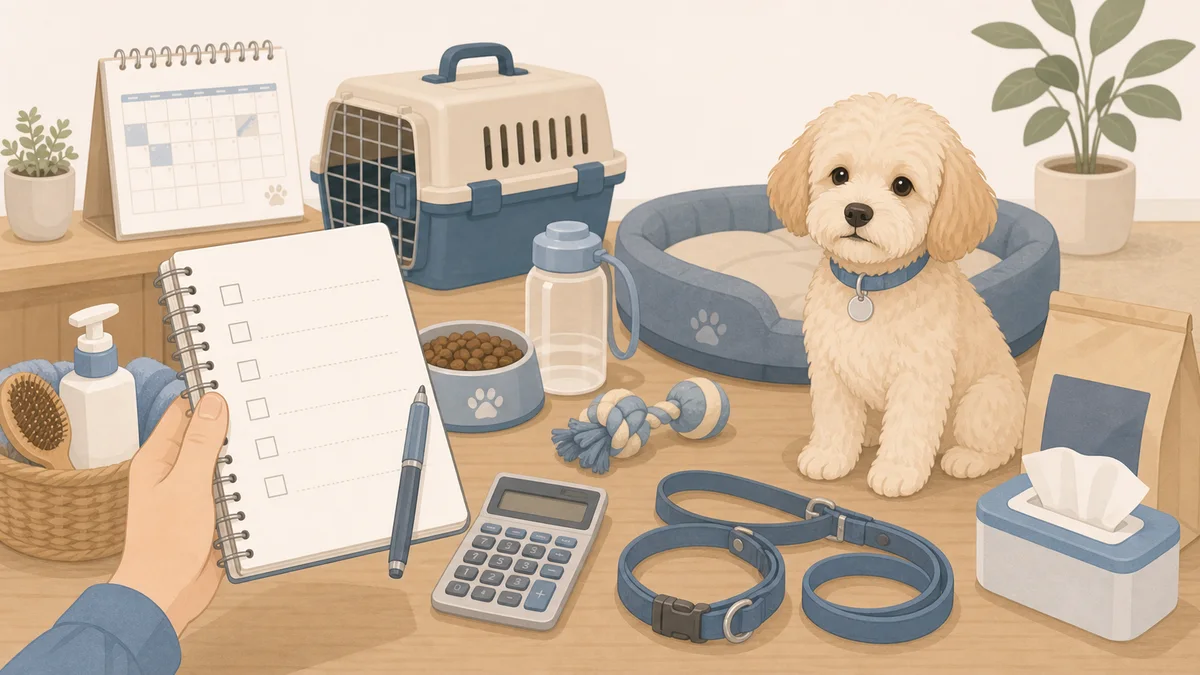
A checklist helps you review one-time, monthly, and irregular costs before welcoming a dog.
Before welcoming a dog, review whether you have:
- A setup budget for initial supplies
- A monthly budget for food and consumables
- A plan for local registration and rabies-related procedures
- A preventive care and health-check budget
- A grooming plan if the breed is likely to need it
- A pet hotel or temporary care plan for travel or emergencies
- A reserve for unexpected costs
- A clear view of whether pet insurance fits your household
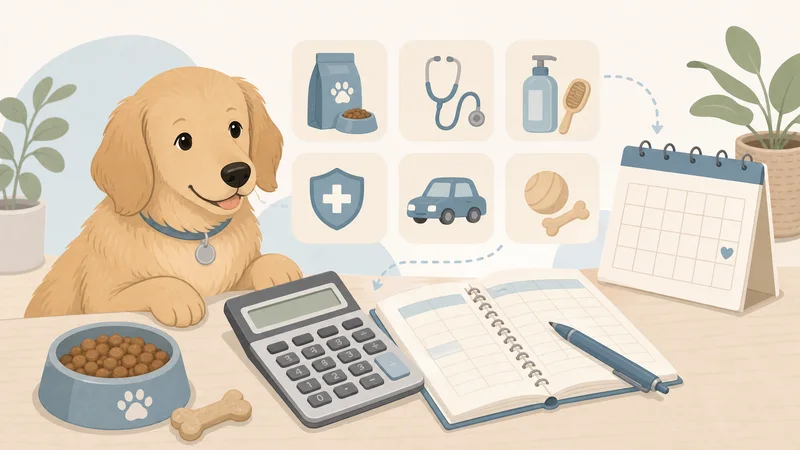
Dedicated tool
Dog cost calculator for Japan
Estimate first-year costs, annual costs from year two onward, and a monthly average using your own inputs.
Important Limitations
All amounts are planning estimates. Actual costs can change by dog size, age, health, region, clinic, salon, store, insurer, facility, and timing.
For medical treatment, insurance enrollment, local procedures, or regulated matters, check current official information and consult the relevant professional, municipality, clinic, or provider.

Use the numbers to plan calmly around your household and care environment.
Sources Checked for the Original Japanese Article
| No. | Source | Use in article | Checked |
|---|---|---|---|
| [1] | アニコム損保「2025最新版 ペットにかける年間支出調査」 | Reference for annual pet spending context | 2026-05-15 |
| [2] | カインズ公式通販 犬用品・ペットシーツ等の商品一覧 | Product and consumable price examples | 2026-05-15 |
| [3] | 厚生労働省「犬の鑑札、注射済票について」 | Rabies-related procedure context | 2026-05-15 |
| [4] | 江東区「犬の登録・狂犬病予防」 | Tokyo municipality fee example | 2026-05-15 |
| [5] | 文京区「犬を飼うには」 | Tokyo municipality fee example | 2026-05-15 |
| [6] | 環境省「犬と猫のマイクロチップ情報登録について」 | Microchip registration fee and procedure context | 2026-05-15 |
| [7] | 日本獣医師会「小動物診療料金」 | Veterinary fee variability context | 2026-05-15 |
| [8] | はせがわ動物病院「料金案内」 | Clinic fee example | 2026-05-15 |
| [9] | 亀戸うえの動物病院「料金表」 | Clinic fee example | 2026-05-15 |
| [10] | アイペット「ペット保険 うちの子 保険料表」 | Pet insurance premium example | 2026-05-15 |
| [11] | ワンケア文京春日「料金表」 | Tokyo grooming price example | 2026-05-15 |
| [12] | J-Line「ペットトリミングの料金表」 | Breed and course-based grooming price example | 2026-05-15 |
| [13] | Dog House「トリミングやペットホテルの料金」 | Pet hotel price example | 2026-05-15 |
| [14] | LOVE WOOF!!「ペットホテル料金表」 | Pet hotel price example | 2026-05-15 |